
President Ilham Aliyev has approved amendments to the legislation related to labor relations. More than 400 changes have been made in total to the Labor Code and a number of other laws.
According to information provided to AZƏRTAC by the Public Relations Department of the Ministry of Labor and Social Protection of the Population, these changes aim to improve labor legislation in line with the conventions of the International Labour Organization and international best practices, to ensure more reliable protection of workers' rights, to introduce flexible and socially oriented legal mechanisms in labor relations, and to incorporate new concepts that meet modern requirements into the legislation.
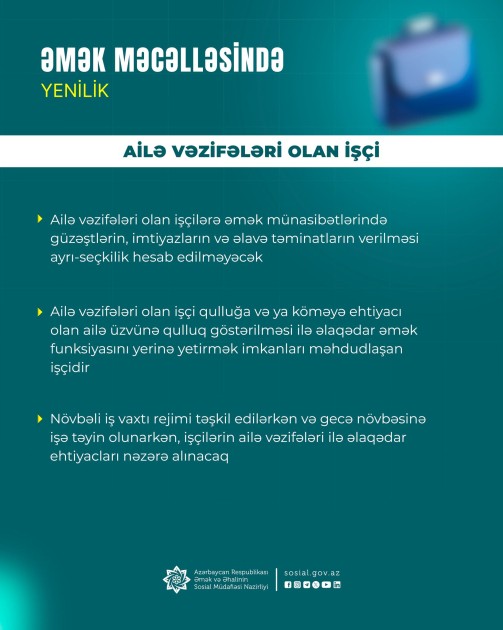
The term “Worker with family responsibilities” has been added to the Labor Code as a new concept. This term covers a worker whose labor activity is restricted due to caring for a family member in need of care or assistance.
Benefits and privileges granted to workers with family responsibilities in labor relations will not be considered discrimination. When preparing shift work schedules and assigning night shifts, the special needs of workers related to their family responsibilities will be taken into account.
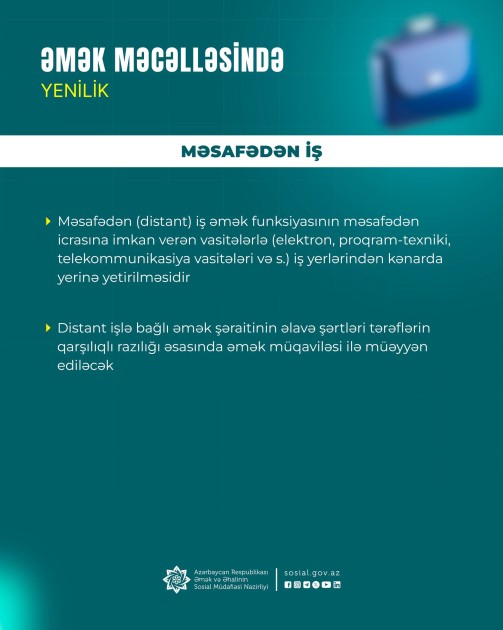
One of the key innovations is the establishment of the legal basis for workers to perform their labor functions remotely (distant) using electronic and software-technical means. For this purpose, the concept of “Remote (distant) work” has been introduced into the Code. The conditions of remote work will be additionally determined in the employment contract with the agreement of the parties.
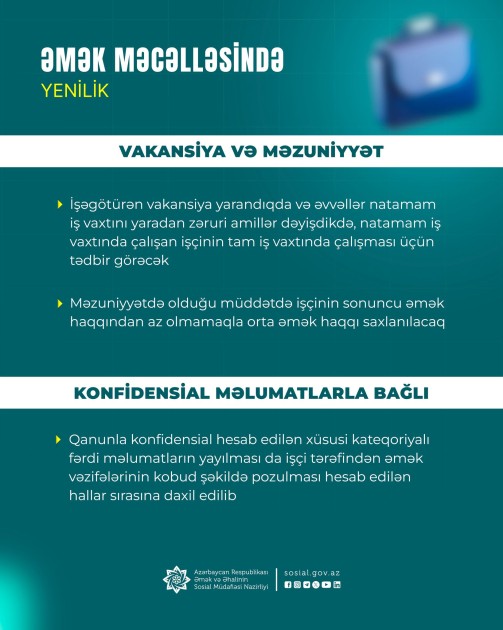
In the legislation, the expression “termination of the employment contract” has been replaced with “expiration/cessation of the employment contract.” The legal basis for the activities of the Tripartite Commission on Labor and Social Issues has been strengthened. It has been ensured that the average wage during an employee's vacation period is maintained at no less than their last wage.
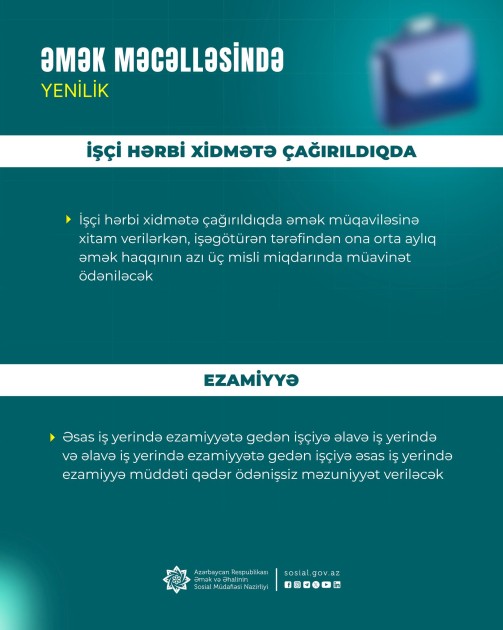
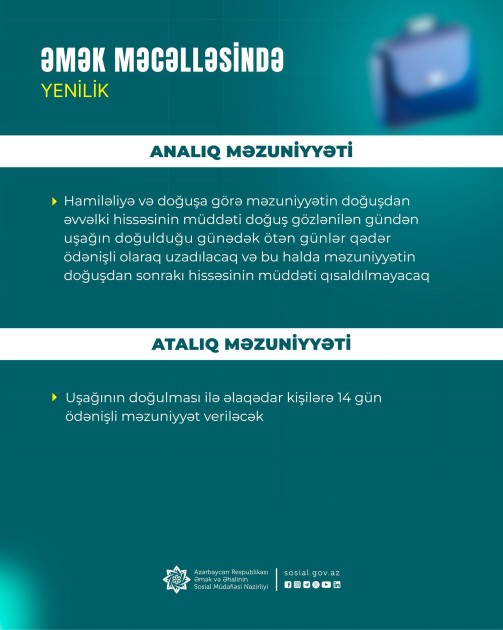
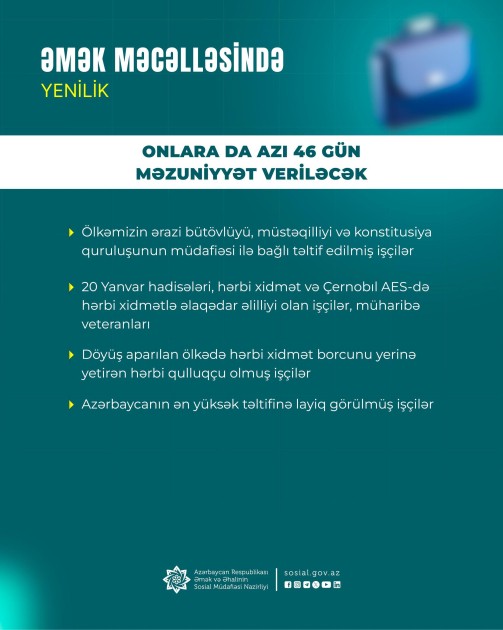
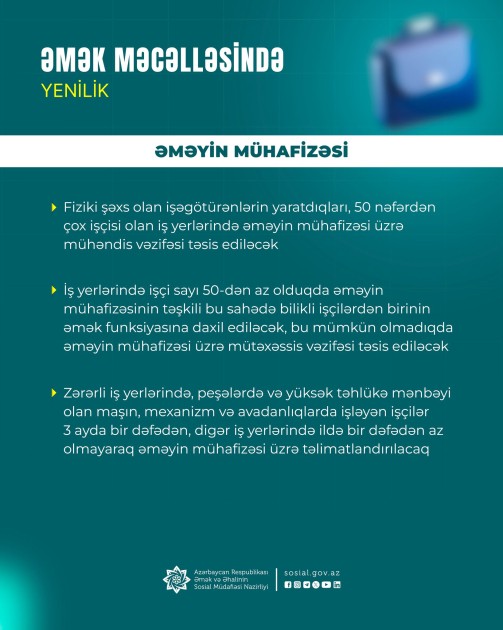
Other significant changes include the following:
These changes are aimed at regulating labor relations in a more flexible, fair, and modern-compliant manner.